


Many of us are desk workers these days, and with most companies adopting the work from home model - we tend to find ourselves sitting down and facing our computers for long, extended periods. While this may seem fine on the surface, constantly leading this type of lifestyle can cause our posture to deteriorate and can trigger some chronic aches in our bodies. Have you ever sat down and worked with a bad back ache? It definitely isn't fun.

Stretching is important before exercising, but it can also be incredibly beneficial when added into your daily routine. Performing certain mobility exercises have been shown to heighten our daily productivity levels by increasing blood flow and circulation throughout our bodies while improving our posture. We don't want to assume that everyone has all the time in the world to spend stretching (we are busy people after all!) - so here are 3 stretches to help you have a more productive day!
Have you ever felt pressure in your lower back? How about neck pain when sitting? Issues with your thoracic spine may be the cause! The thoracic spine is located at the middle of our back and is primarily responsible for mobility in our upper body.

Sitting too long at our desk jobs and a lack of stretching thereafter can cause stiffness in the thoracic spine - which can inhibit upper back mobility and cause chronic neck pain. If the thoracic spine is immobile, it can cause the lumbar spine (our lower back) to do more work - causing the lower back pain many of us are familiar with. By extension, thoracic issues can also affect our posture, upper/lower limb movement, and our breathing.
Threading the Needle is a good way to alleviate stiffness and encourage more thoracic rotation. Below are some written steps on how to thread the needle.
Repeat the action 5 times on each side, up to a max of 10 times each side.
Our hip flexors are positioned near the top of our thighs and play an important role in creating stability for our spine and pelvis, while also generating power when running or jumping.
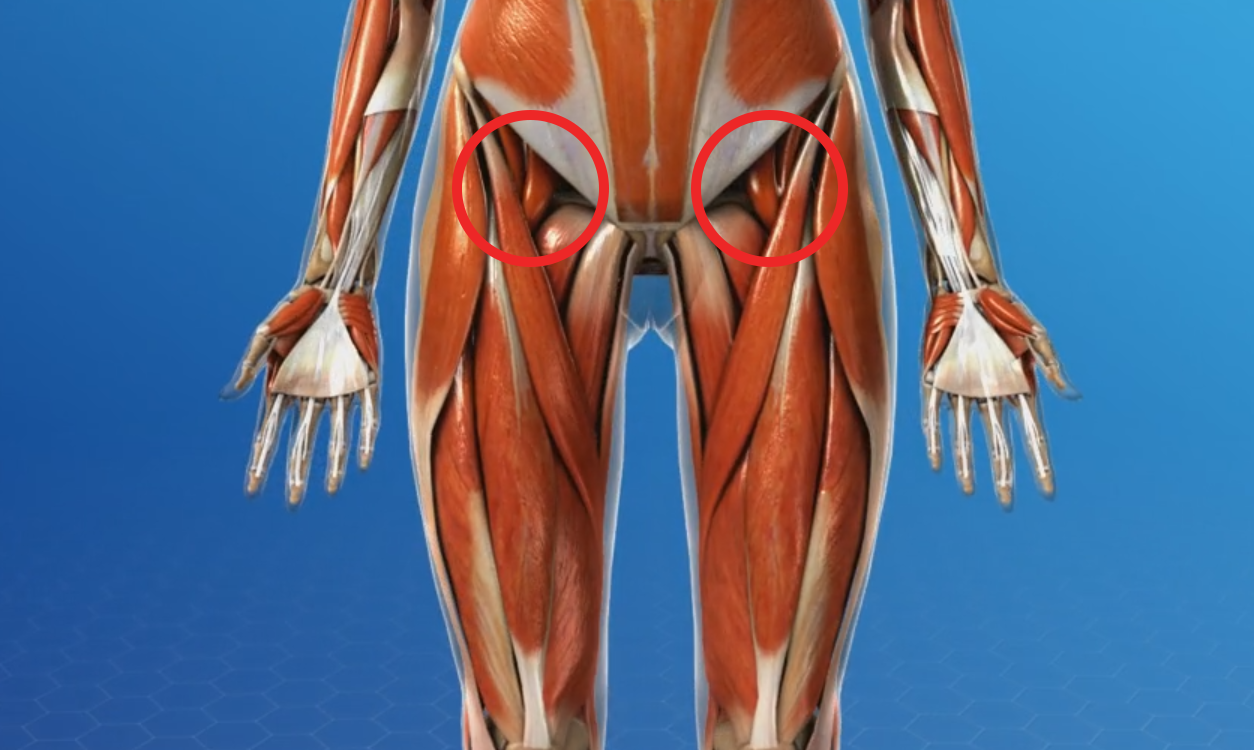
Being seated and stuck at our desks for so long can cause our hip flexors to become tight and weak - resulting in several postural issues which can potentially lead to injury as we grow older. Having chronic knee pain? Tight hip flexors could be affecting that too.
Performing the Low Lunge can help in releasing tightness in our hips, while encouraging greater hip extension. Here's how to do it:
Repeat the action 5 times on each side, up to a max of 10 times each side.
The posterior chain is the "backside" of our body, comprising of the muscles from our neck down to our legs. It plays a huge role in stabilizing our spine and hips, while working in tandem with our anterior chain (the "frontside") to keep our body upright.

Our posterior chain can weaken from prolonged periods of sitting, where back aches and muscle imbalances can develop as a result.
Hip Hinge Breathing is a technique used to stretch and strengthen the muscles in our posterior chain, while simultaneously opening up our hips and pelvis. It is a stretch that essentially opens up most of our body! We can give it a try by doing this:
Remain in this position and take 5-10 long breaths.
Do them when you wake up, do them before breakfast or do them while you're taking a short break from the computer - these stretches are quick and easy to perform even in the most hectic of schedules. Consistency is key, so performing them regularly is sure to affect your body in more positive ways than you can imagine.
At the end of the day though, it is important to engage in some form of exercise to keep our body in good, functional condition. The WHO (World Health Organization) recommends the general population to get around 150 to 300 minutes of moderate-intensity exercise per week, which boils down to roughly 20-40 minutes each day.
Always remember, stretching up opens the area - but movement is what keeps it secure.
Many of us are desk workers these days, and with most companies adopting the work from home model - we tend to find ourselves sitting down and facing our computers for long, extended periods. While this may seem fine on the surface, constantly leading this type of lifestyle can cause our posture to deteriorate and can trigger some chronic aches in our bodies. Have you ever sat down and worked with a bad back ache? It definitely isn't fun.
Stretching is important before exercising, but it can also be incredibly beneficial when added into your daily routine. Performing certain mobility exercises have been shown to heighten our daily productivity levels by increasing blood flow and circulation throughout our bodies while improving our posture. We don't want to assume that everyone has all the time in the world to spend stretching (we are busy people after all!) - so here are 3 stretches to help you have a more productive day!
Have you ever felt pressure in your lower back? How about neck pain when sitting? Issues with your thoracic spine may be the cause! The thoracic spine is located at the middle of our back and is primarily responsible for mobility in our upper body.
Sitting too long at our desk jobs and a lack of stretching thereafter can cause stiffness in the thoracic spine - which can inhibit upper back mobility and cause chronic neck pain. If the thoracic spine is immobile, it can cause the lumbar spine (our lower back) to do more work - causing the lower back pain many of us are familiar with. By extension, thoracic issues can also affect our posture, upper/lower limb movement, and our breathing.
Threading the Needle is a good way to alleviate stiffness and encourage more thoracic rotation. Below are some written steps on how to thread the needle.
Repeat the action 5 times on each side, up to a max of 10 times each side.
Our hip flexors are positioned near the top of our thighs and play an important role in creating stability for our spine and pelvis, while also generating power when running or jumping.
Being seated and stuck at our desks for so long can cause our hip flexors to become tight and weak - resulting in several postural issues which can potentially lead to injury as we grow older. Having chronic knee pain? Tight hip flexors could be affecting that too.
Performing the Low Lunge can help in releasing tightness in our hips, while encouraging greater hip extension. Here's how to do it:
Repeat the action 5 times on each side, up to a max of 10 times each side.
The posterior chain is the "backside" of our body, comprising of the muscles from our neck down to our legs. It plays a huge role in stabilizing our spine and hips, while working in tandem with our anterior chain (the "frontside") to keep our body upright.
Our posterior chain can weaken from prolonged periods of sitting, where back aches and muscle imbalances can develop as a result.
Hip Hinge Breathing is a technique used to stretch and strengthen the muscles in our posterior chain, while simultaneously opening up our hips and pelvis. It is a stretch that essentially opens up most of our body! We can give it a try by doing this:
Remain in this position and take 5-10 long breaths.
Do them when you wake up, do them before breakfast or do them while you're taking a short break from the computer - these stretches are quick and easy to perform even in the most hectic of schedules. Consistency is key, so performing them regularly is sure to affect your body in more positive ways than you can imagine.
At the end of the day though, it is important to engage in some form of exercise to keep our body in good, functional condition. The WHO (World Health Organization) recommends the general population to get around 150 to 300 minutes of moderate-intensity exercise per week, which boils down to roughly 20-40 minutes each day.
Always remember, stretching up opens the area - but movement is what keeps it secure.